If you’ve ever tried on ten pairs of jeans only to leave the fitting room frustrated, you’re not alone.
Finding the best jeans for petite curvy women can feel almost impossible. Most jeans are designed for standard proportions, which often means choosing between a waistband that gaps, legs that are too long, or hips that feel too tight.
The good news? The problem isn’t your body.
It’s the jeans.
Why Finding Jeans Is So Difficult
Fashion brands typically grade their denim from one standard fit model.
That works reasonably well for average body proportions, but many women have a different shape:
- A smaller waist
- Fuller hips
- Curvier thighs
- A shorter inseam
Traditional sizing rarely accounts for all four measurements at once.
As a result, many petite women end up buying jeans that fit one area but compromise everywhere else.
The Biggest Problems Petite Curvy Women Face
1. The Waist Gap
One of the most common complaints is the dreaded waist gap.
Jeans fit perfectly around the hips but leave several centimeters of extra fabric around the waist.
This happens because many manufacturers simply make larger sizes wider instead of reshaping the pattern.
2. Jeans That Are Too Long
Many “regular” jeans are designed for women around 5’6″ to 5’8″.
If you’re 5’0″–5’4″, you probably end up:
- Rolling the cuffs
- Paying for alterations
- Cutting the hem
A true petite jean is designed with a shorter inseam while maintaining proper proportions.
3. Tight Thighs
Many women size up just to fit their thighs.
Unfortunately, sizing up usually creates an even larger waist gap.
A better solution is a pattern specifically designed for curvier proportions.
What Makes the Best Jeans for Petite Curvy Women?
When shopping for petite jeans for women, look for these features.
Higher Back Rise
This helps prevent pulling and improves comfort while sitting.
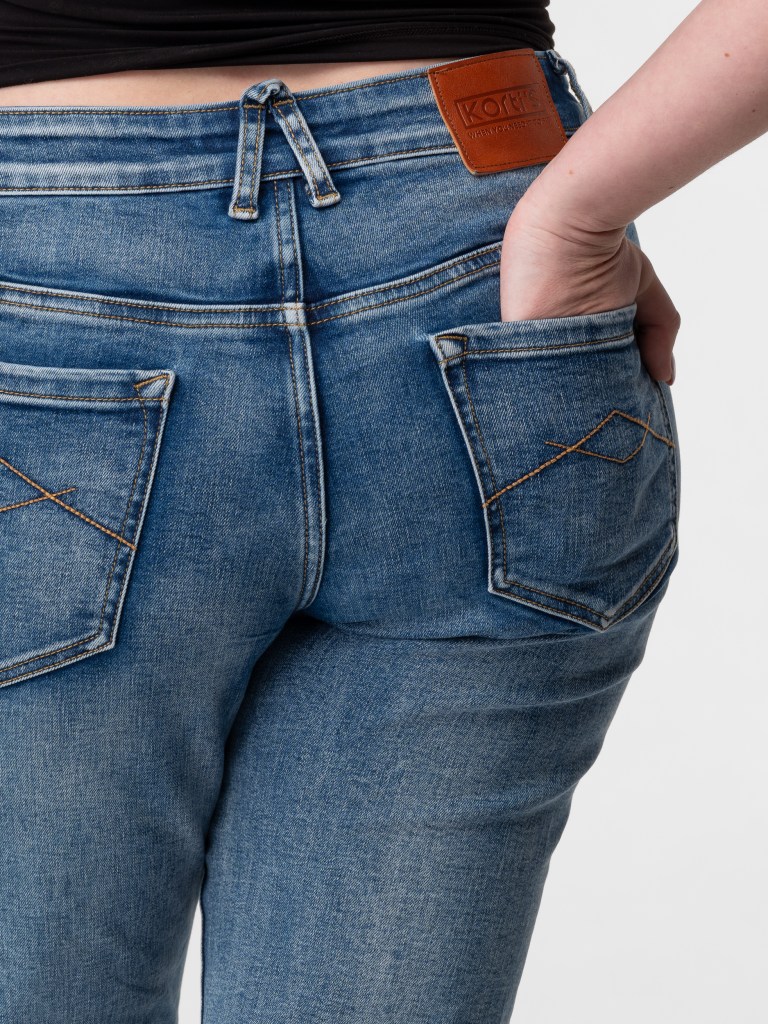
Contoured Waistband
A curved waistband follows your natural shape and reduces gaping.
Petite Inseam
No hemming.
No rolling.
No losing the original shape of the jean.
Comfortable Stretch
Look for denim with just enough stretch to move comfortably while keeping its shape throughout the day.
Premium Denim
Higher-quality denim generally lasts longer, fits better over time, and feels more structured than lower-cost alternatives.
Straight-Leg Jeans Are Making a Comeback
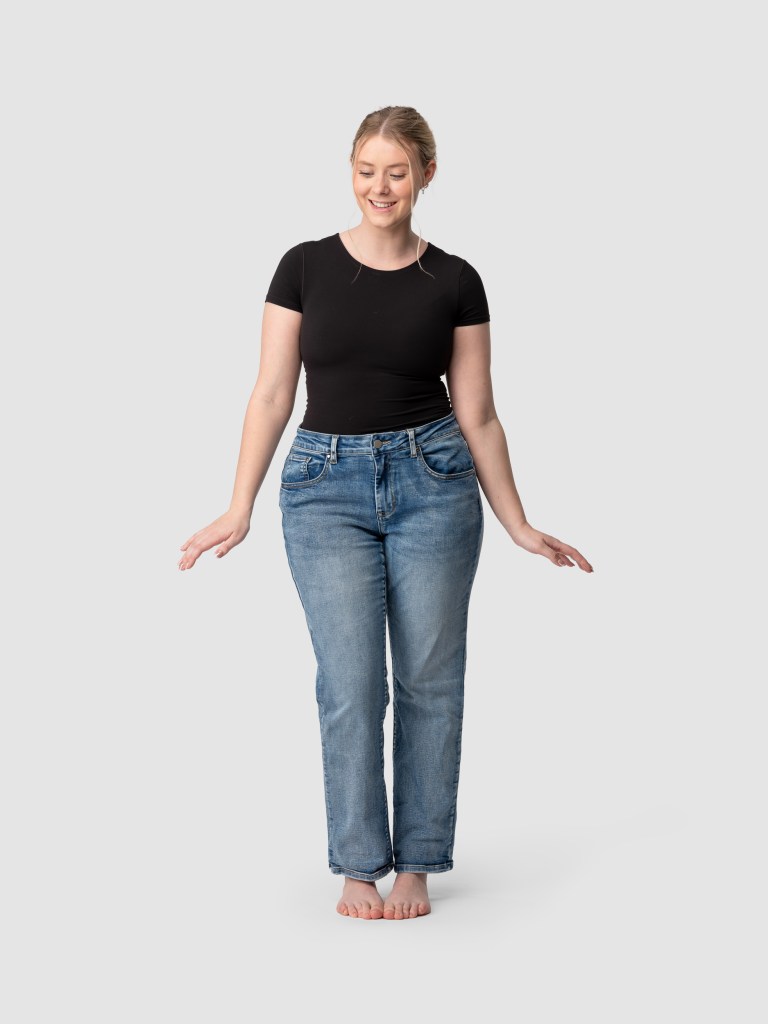
While skinny jeans still have their place, many stylists now recommend straight-leg jeans for petite women.
Straight-leg denim creates a longer visual line while balancing curves naturally.
They’re also incredibly versatile and can be dressed up or down.
How Should Jeans Fit?
A great pair of jeans should:
- Sit snugly at the waist without pinching
- Follow your hips comfortably
- Feel supportive through the thighs
- Hit at the correct ankle length
- Stay in place without constantly pulling them up
If you immediately think you’ll need alterations, they’re probably not the right pair.
Stop Blaming Your Body
For years, women have been told to:
- Lose weight
- Size up
- Wear a belt
- Tailor every pair
But clothing should adapt to real bodies—not the other way around.
When jeans are designed with petite and curvy proportions in mind, many of these common frustrations simply disappear.
Why Premium Jeans Can Be Worth the Investment
Premium denim isn’t just about the fabric.
It often reflects more thoughtful pattern-making, stronger stitching, and better construction.
That can mean:
Better Comfort
Higher-quality denim generally lasts longer, fits better over time, and feels more structured than lower-cost alternatives.
Better Durability
Premium denim is made with stronger materials and reinforced stitching, helping it maintain its appearance even after repeated washing.
Better Shape Retention
Quality denim maintains its structure and fit over time, helping your jeans look and feel great for longer.
A More Flattering Fit
Thoughtful pattern-making and premium construction create jeans that complement your natural shape while providing lasting comfort.
Instead of replacing inexpensive jeans every season, investing in one great pair can provide better value over time.