You finally find a pair of jeans that fits perfectly through the hips and thighs.
You zip them up.
You turn around.
And there it is.
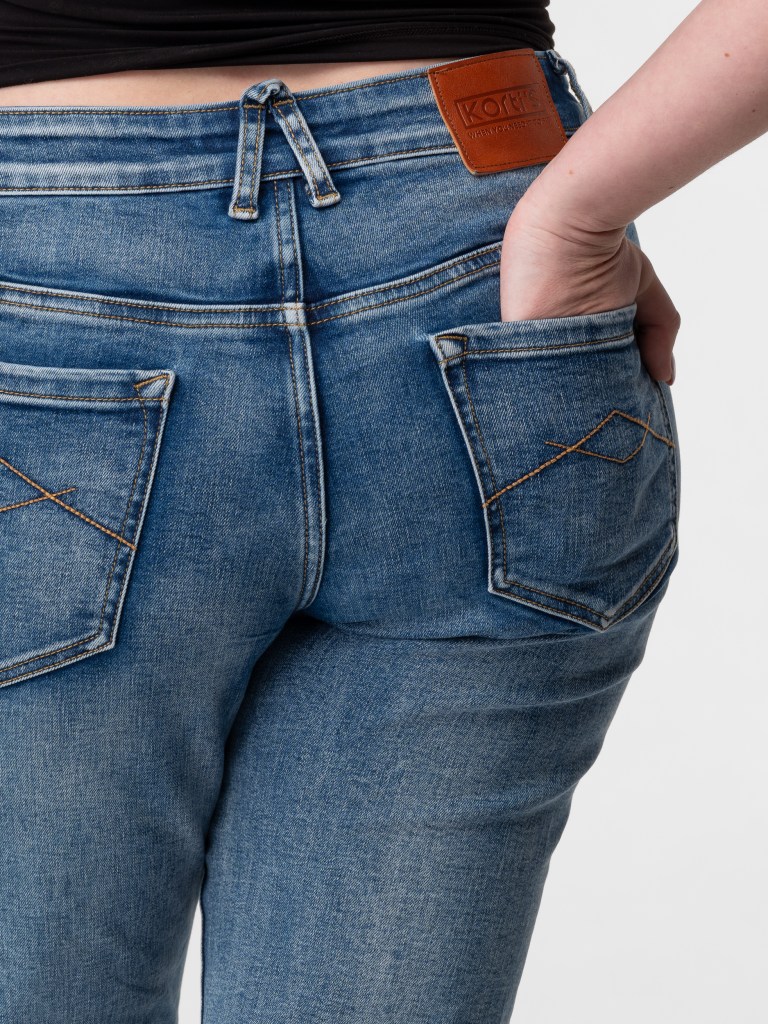
A gap at the back of your waistband.
Sound familiar?
If you’ve ever wondered “Why do my jeans gap at the waist?”, you’re certainly not alone. It’s one of the most common fit frustrations women experience—and contrary to popular belief, it usually isn’t because you’re wearing the wrong size.
Most of the time, it’s because the jeans weren’t designed for your body shape.
What Causes the Waist Gap?
A waistband gap happens when your hips and waist have different proportions than the pattern used to create the jeans.
Many brands design their jeans using a standard body shape and simply scale that pattern up or down for different sizes.
The problem?
Women’s bodies aren’t simply “larger” or “smaller.”
Some women have:
- A defined waist
- Fuller hips
- Curvier thighs
- A shorter torso
- A petite frame
Those natural proportions often require a completely different pattern—not just a different size.
It’s More Common Than You Think
If you’ve ever experienced one of these situations, you’ve likely dealt with waistband gaping.
- Your jeans fit perfectly everywhere except the waist.
- You constantly pull your jeans up throughout the day.
- You need to wear a belt with every pair.
- Sitting down makes the waistband stick out even more.
- The back of your jeans opens whenever you bend over.
These are incredibly common issues, especially for women with curvier hips or petite proportions.
Why Buying a Smaller Size Doesn’t Work
One of the biggest mistakes people make is sizing down.
It seems logical.
If the waist is loose, buy a smaller size.
Unfortunately, that often creates new problems.
Now the waistband may fit better—but:
- The hips feel tight
- The thighs become restrictive
- Sitting becomes uncomfortable
- The fabric pulls across the front
A good pair of jeans should fit your waist without sacrificing comfort everywhere else.
Why Belts Aren’t Always the Solution
Belts can be useful accessories.
But they shouldn’t be the only thing keeping your jeans in place.
Using a belt to solve a waistband gap often creates:
- Bunching around the waist
- Uncomfortable pressure
- Extra fabric folding underneath
- An unflattering silhouette
A properly fitted waistband should sit comfortably against your body even without a belt.
The Importance of a Contoured Waistband
One feature that makes a significant difference is a contoured waistband.
Instead of being cut in a perfectly straight line, a contoured waistband follows the natural curve between your waist and hips.
This allows the jeans to sit closer to your body while remaining comfortable.
Although every brand approaches fit differently, this type of construction is commonly used in jeans designed for curvier body shapes.
Why Petite Women Experience This More Often
Many petite women have proportionally shorter torsos.
Combined with fuller hips, this often makes waistband gaps even more noticeable.
Standard-length jeans are frequently designed around taller fit models.
That means even if the inseam is shortened, the overall proportions may still be designed for a completely different body shape.
This is why many women describe trying on dozens of pairs before finding one that feels right.
Other Signs Your Jeans Don’t Fit Properly
A waistband gap is only one clue.
Other warning signs include:
- Twisting seams
- Excess fabric behind the knees
- Constant sliding down
- Tight hips with a loose waist
- Uncomfortable pressure while sitting
If you’re experiencing several of these at once, the issue is likely the jean’s pattern rather than your body.
How to Find Jeans That Actually Fit
When shopping for jeans, look beyond the size label.
Instead, focus on features like:
- A Contoured Waistband: Designed to reduce gaping.
- Stretch That Recovers: Quality stretch denim should move with your body while returning to its original shape.
- Proper Rise: The right rise helps keep jeans comfortably in place throughout the day.
- Petite Proportions: For shorter women, correct proportions matter just as much as inseam length.
- Quality Pattern Making: Good jeans aren’t only about fabric. They’re about how every panel is shaped and sewn together.
Stop Blaming Your Body
For years, women have been told:
“Just wear a belt.”
“Size down.”
“Get them tailored.”
But clothing should fit people—not the other way around.
If your jeans gap at the waist, it doesn’t mean there’s something wrong with your body.
It may simply mean those jeans weren’t designed for your proportions.
Finding brands that understand different body shapes can make getting dressed much easier—and much more comfortable.
Quick Takeaways
- Waist gaps are usually caused by pattern design—not your body.
- Sizing down often creates new fit problems.
- Belts can help temporarily but don’t fix poor fit.
- Contoured waistbands are designed to follow natural body curves.
- The right jeans should fit your waist, hips, and thighs together.
Korti’s Tip
When trying on jeans, bend, sit, and walk around for a few minutes.
If the waistband immediately lifts away from your back while the hips still fit comfortably, it’s likely a pattern issue—not a sizing issue.
Frequently Asked Questions
Why do my jeans fit my hips but gap at the waist?
This usually happens because your waist is proportionally smaller than your hips. Many jeans are designed using standard body measurements that don’t reflect curvier body shapes.
Can a belt fix waistband gaping?
A belt can reduce movement, but it doesn’t solve the underlying fit issue. Jeans designed with a contoured waistband generally provide a more comfortable fit.
Should I size down if my waist is loose?
Not necessarily. Sizing down may make the hips and thighs too tight. Instead, look for jeans designed for your body proportions.
What is a contoured waistband?
A contoured waistband is curved to follow the natural shape of the waist, helping reduce gaping while improving comfort.
Are waist gaps more common for petite women?
They can be. Petite women often have different body proportions than the fit models used by many brands, making waistband gaps more noticeable.